

Protect privileged access across your entire environment with agentless, identity-based controls built for resilience, rapid deployment, and high-stakes environments.

CyberArk Competitors: Xage XPAM vs. CyberArk (Idira)
Traditional PAM Complexity Can Create Security Gaps
When evaluating CyberArk competitors, organizations should consider how easily privileged access protection can extend across their entire environment. PAM architectures that depend on centralized vaults, multiple components, and complex onboarding can make that harder. Those gaps matter because credential abuse remains an initial access vector in 13% of breaches, according to the 2026 Verizon Data Breach Investigations Report.
CyberArk, now part of Palo Alto Networks’ Idira, uses a vault-centric architecture with separate components and modules for different PAM capabilities. Xage takes a different approach, bringing privileged access, remote access, MFA, session controls, and identity-based enforcement together through a distributed architecture.
What Is Xage Extended Privileged Access Management?
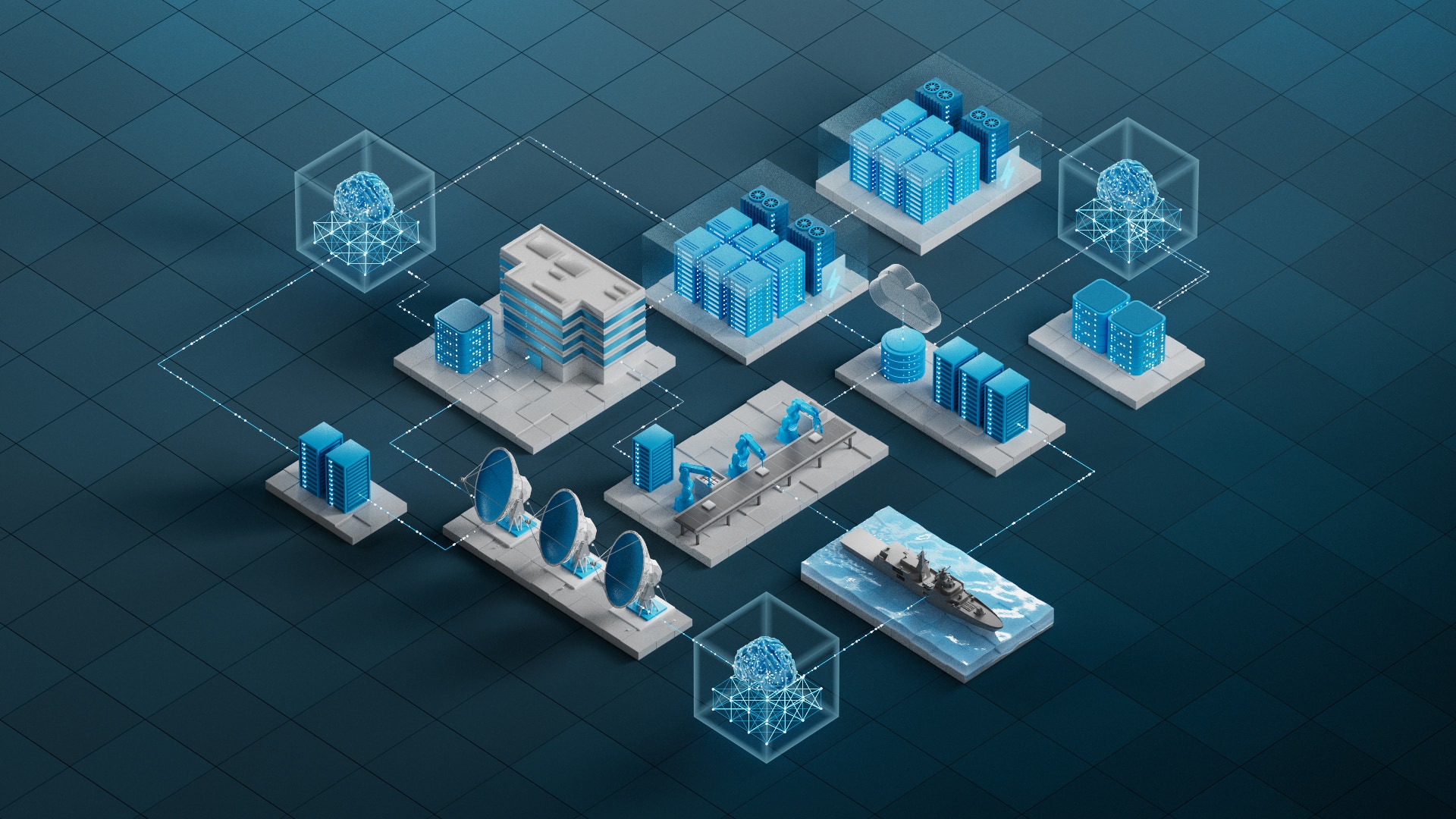
Xage Extended Privileged Access Management (XPAM) is an identity security solution that controls and audits privileged access across human and non-human identities without relying on a centralized enforcement architecture.
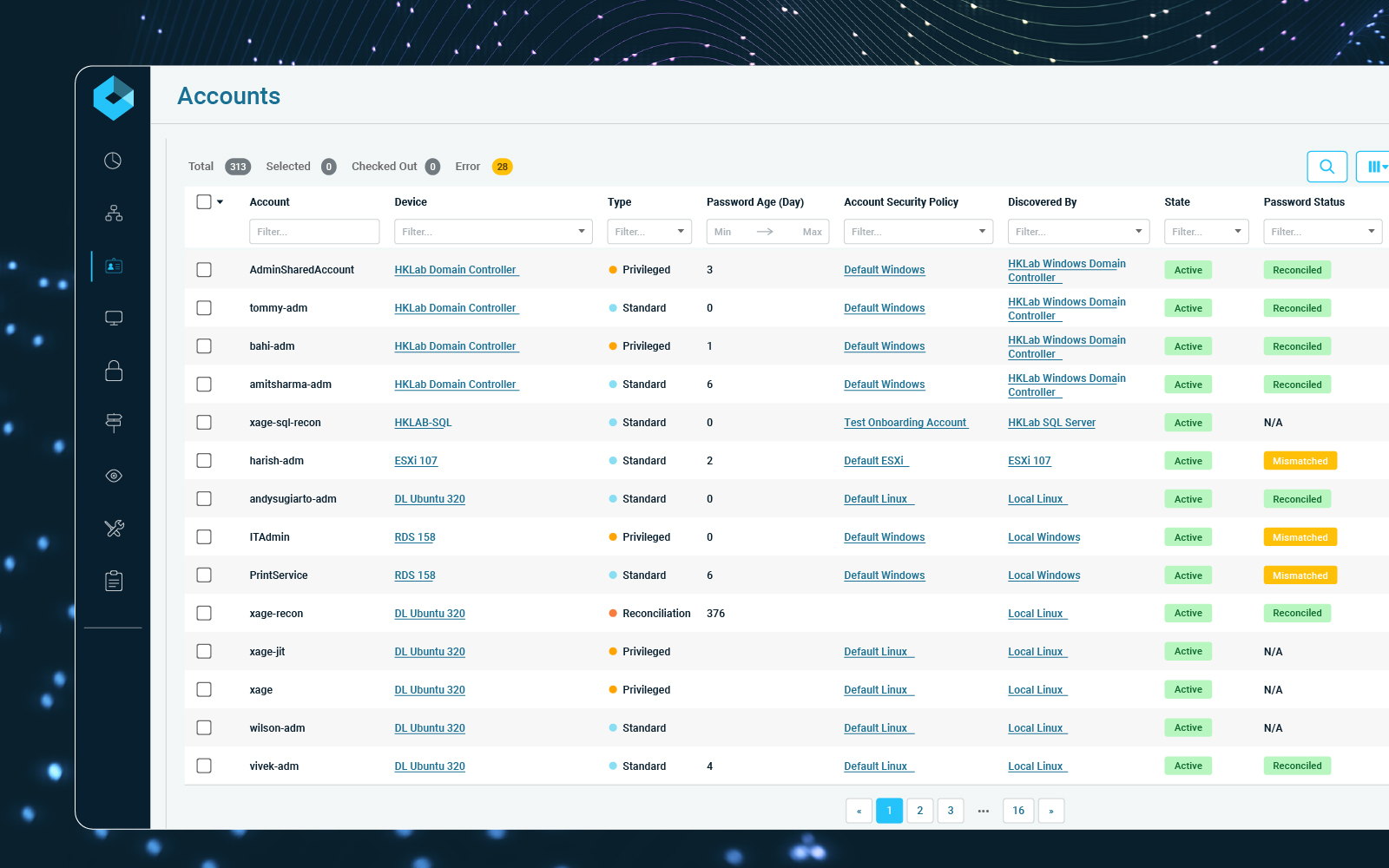
Xage combines privileged account discovery, credential protection, just-in-time access, MFA, session management, secure remote access, and identity-based controls in one platform.
With Xage XPAM, you can:
- Apply privileged access controls without deploying agents across every endpoint.
- Replace standing privilege with just-in-time, policy-based access.
- Extend MFA to legacy systems and resources that do not natively support it.
- Control and record privileged sessions across IT, OT, cloud, and distributed environments.
- Maintain local authentication and policy enforcement when WAN or cloud connectivity is unavailable.
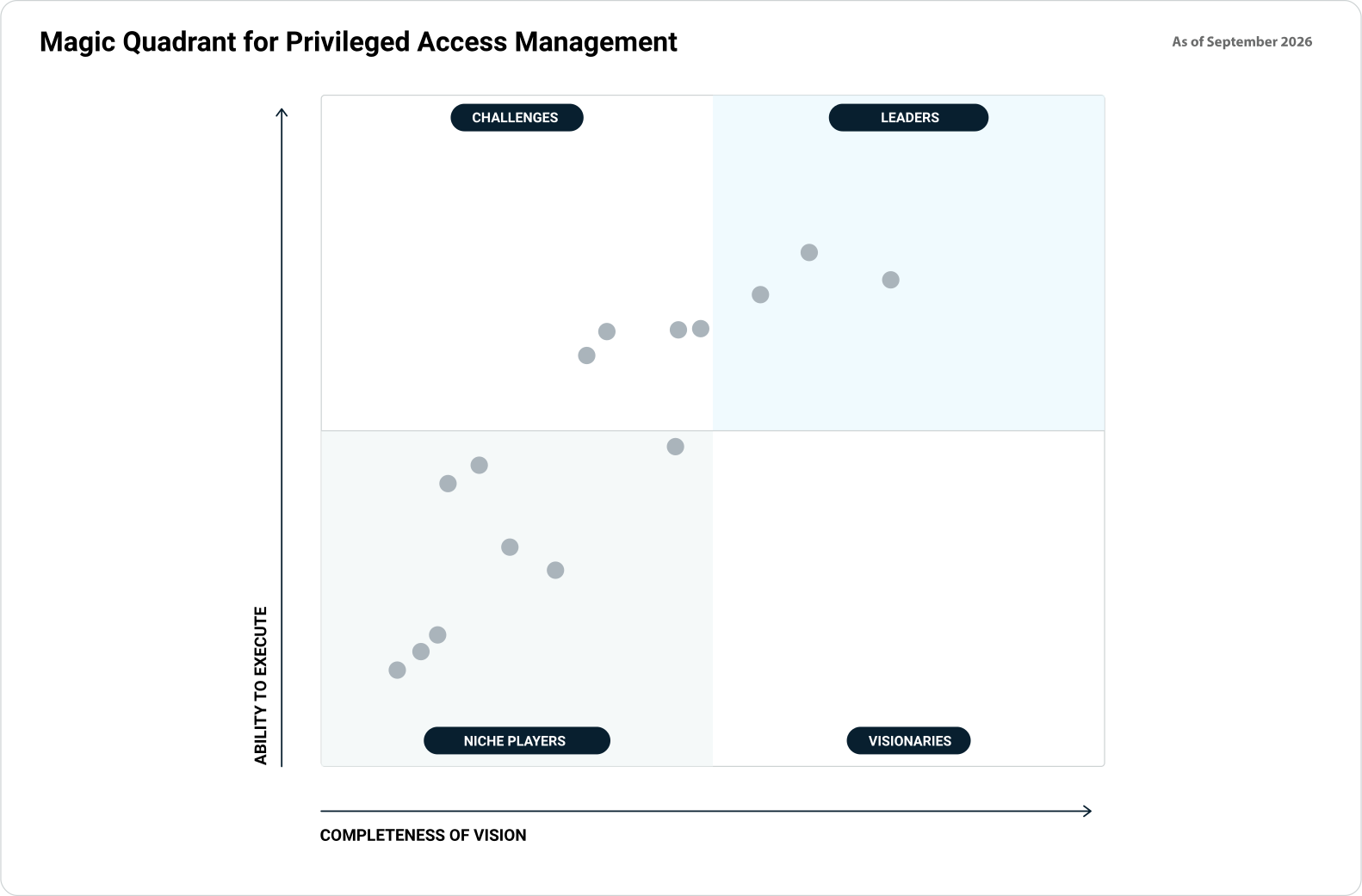
There’s a New Name in PAM.
Xage Security Named in the 2026 Gartner® Magic Quadrant™ for Privileged Access Management
Read the Report
CyberArk Competitors: At-a-Glance Comparison
Xage XPAM and CyberArk (now Palo Alto Networks Idira) both protect privileged access, but their architectures differ significantly. Xage uses a distributed Zero Trust Fabric with two core components and integrated remote access, while the CyberArk PAM solution uses a centralized vault architecture with multiple components and modules.
| Criteria | Xage XPAM | CyberArk (Now Idira) |
|---|---|---|
| Core architecture | Distributed fabric (Xage Fabric); no central vault | Centralized, vault-based (Digital Vault) |
| Core components for full capability | 2 (Manager + Nodes) | 7+ components |
| Fully self-hosted, no cloud dependency | Yes, incl. remote access & ZTNA | Core PASM yes; newer modules SaaS-only |
| Native OT/ICS/SCADA support | Yes, incl. Purdue Model alignment | Not purpose-built for OT |
| Zero Trust Remote Access | Native, included | Separate SaaS module |
| Typical time to initial protection | Hours to about a day | Weeks to months (multi-component) |
| On-prem / distributed sites | Yes, supports on-prem and distributed sites, even if connectivity is disrupted | Primarily SaaS delivery model. Requires additional jumpbox infrastructure, server licenses, and central connectivity to remain operational. |
| Licensing model | User-based, unlimited assets, one tier | User + component/module based |
| Multi-user session collaboration | Supported natively | Limited |
Full Comparison: Xage XPAM vs. CyberArk
Xage XPAM and CyberArk PAM solutions differ across privileged access architecture, credential security, session management, deployment, resilience, identity controls, and infrastructure requirements. The detailed comparison below shows how each approach addresses these areas.
Download as PDF
Privileged Access Security & Management
Xage XPAM applies privileged access controls through an agentless policy overlay without requiring every credential to be discovered and vaulted first. It combines decentralized credential protection, just-in-time access, resilient local enforcement, and secure third-party access to reduce standing privilege and accelerate protection across distributed environments.
| Criteria | Xage XPAM | CyberArk (Now Idira) |
|---|---|---|
| Discovery & Time-to-Protection | Instant Agentless Policy Overlay: Governs access immediately upon network placement; no need to wait for full credential discovery/rotation. | Heavy Discovery & Ingestion: Multi-month discovery scans, account dependency mapping, and complex onboarding backlogs. |
| Credential Management & Vaulting | Decentralized / Secrets-First: Eliminates standing credentials; supports dynamic rotation, vaulted secrets, and credential injection without exposing plaintext to users. | Monolithic Vault (EPV/Privilege Cloud): Central database stores and rotates static credentials. High blast radius if compromised. |
| Vault Security | Quantum-resistant cryptography: credentials and policy are fragmented and distributed across the Xage Fabric, so no single node holds a complete secret. | AES encryption with standard PKI; not built on post-quantum cryptography. |
| Resilience | No single point of failure; one node compromised does not expose credentials or policy. 100% Resilient Local Enforcement Nodes sync cryptographically; full authentication and policy enforcement continue during WAN/cloud outages. | Vault security/availability is central to the system. Fragile Failover Requires complex clustered vaults, database replication, and active WAN links. Outages cause lockouts. |
| Zero Standing Privilege (ZSP) & JIT Access | Native JIT Protocol Proxy: Ephemeral access granted at the protocol/asset level; dynamic role-binding; zero persistent local admin rights. | Dynamic JIT via Alero / Secure Web Sessions: Session brokering with short-lived access, but often relies on underlying vaulted local accounts. |
| Third-Party & Remote Vendor Access | Direct Agentless Zero Trust Overlay: Browser-based or native client access to internal assets; no client VPN, no jump hosts, no network-level exposure. | Remote Access (formerly Alero): Biometric/mobile-authenticated remote access brokered through Idira Cloud and PSM. |
Session Management & Security Features
Xage integrates privileged session controls with the same platform used for remote access and identity-based policy enforcement. This gives security teams one approach for recording privileged activity, controlling sessions, securely transferring files, and restricting lateral machine-to-machine access.
| Criteria | Xage XPAM | CyberArk (Now Idira) |
|---|---|---|
| Command/process capture | Agentless SSH command capture and RDP process capture | Delivered through the PSM jump-server component |
| Session recording | Built-in, agentless | Built-in, agentless |
| Zero Trust Remote Access | Native, included in the same platform | Available via a separate SaaS module (e.g., Secure Cloud Access) |
| Session collaboration | Multiple users can join the same session concurrently | Limited multi-user session collaboration |
| Secure file transfer with malware scanning | Built-in, with AV integration, fingerprinting, and integrity checks | Not natively supported |
| East-west (machine-to-machine) control | Policy-based control of lateral M2M traffic | Not a core PAM capability |
Deployment & Infrastructure Footprint
Xage uses a distributed Zero Trust mesh rather than relying on a central vault for enforcement. Its agentless architecture is designed to reduce infrastructure requirements and network changes while maintaining authentication and policy enforcement across on-premises, remote, air-gapped, and disconnected environments.
| Criteria | Xage XPAM | CyberArk (Now Idira) |
|---|---|---|
| Architectural Model | Distributed Zero Trust Mesh · Tamper-proof, multi-node consensus · Zero single point of failure | Monolithic Central Vault · Database-centric (EPV / Privilege Cloud) · Single point of compromise |
| Deployment model | Software-based; Ubuntu/RedHat VM or virtual appliance | Software-based; PAM Self-Hosted requires Windows servers, Privilege Cloud offered as SaaS |
| Core components | Minimum 2 (Manager + Nodes) for full capability | Full suite typically 7+ components (Vault, PVWA, CPM, PSM, and module-specific add-ons) |
| Agent requirement | Agentless | Agentless for core PAM; session proxying relies on the dedicated PSM jump-server component |
| Air-gapped/offline support | Fully self-hostable, no cloud dependency, including ZTNA and remote access. 100% operational when WAN, cloud, or central services are disconnected. | Fully self-hostable, no cloud dependency, including ZTNA and remote access |
| Centralized management | Single console for PAM, ZTNA, MFA, SSO, file transfer, and session collaboration | Separate consoles/components across vaulting, session management, and secrets modules |
Identity & Access Control
Xage extends identity-based access policies beyond traditional privileged accounts to systems and resources that may lack native identity controls. This allows security teams to apply MFA and granular access policies to legacy IT and OT systems while using existing enterprise identity providers.
| Criteria | Xage XPAM | CyberArk (Now Idira) |
|---|---|---|
| AD/LDAP integration | Supported, including multi-level LDAP/LDAPS | Supported |
| Identity-based micro-segmentation | Supported via Xage enforcement points | Not a core PAM capability |
| Universal MFA Support | Universal MFA Injection: Integrates with Entra ID, Okta, Ping; injects MFA into legacy IT/OT systems, protocols, and devices that lack native MFA support. | Identity Security Platform: Native MFA/SSO (Idaptive) or integration with enterprise IdPs; step-up authentication at vault/PSM. |
Scalability & Resilience
Xage distributes policy enforcement across nodes so privileged access controls can continue functioning when WAN, cloud, or central services are unavailable. Built-in distributed consensus provides fault tolerance, while rolling updates allow nodes to be maintained without depending on a centralized vault.
| Criteria | Xage XPAM | CyberArk (Now Idira) |
|---|---|---|
| Installation time | Containerized install; operational in hours | Multi-component install; Gartner's Oct 2025 PAM Magic Quadrant notes customer-reported complexity in initial setup and upgrades |
| HA model | Built-in fault tolerance via distributed consensus | HA supported via clustered vault and redundant components, adding architectural complexity |
| Patching/upgrades | Rolling updates across distributed nodes | Sequential upgrade path across Vault and dependent components |
| Blast Radius Containment | Asset-Layer Isolation: Compromise of one node or credential cannot compromise the rest of the estate | Severe Vault Risk: Breaching the central vault or PSM tier compromises all vaulted enterprise secrets |
Licensing & Total Cost of Ownership
Xage uses user-based licensing with unlimited assets and a two-component core architecture. This approach is designed to reduce infrastructure overhead and simplify expansion across large environments without requiring separate licensing and infrastructure for multiple PAM modules.
| Criteria | Xage XPAM | CyberArk (Now Idira) |
|---|---|---|
| Infrastructure Overhead (TCO) | Zero Appliance Sprawl: Eliminates RDP jump boxes, dedicated bastions, hardware appliances, and VPN licensing. | Extremely Heavy Footprint Requires fleets of Windows servers for PSM, DR vault instances, CPM engines, and endless compute. |
| Day-One Protection & Time-to-Value | Immediate (Hours to Days) Agentless overlay wraps any asset with JIT access & MFA instantly, without prior vaulting. | Multi-Year Projects Requires account discovery, dependency mapping, custom CPM plugins, and heavy professional services. |
| License model | User-based, unlimited assets, single tier | Combination of user-based and per-module/component licensing |
| Cost | Lower infrastructure overhead due to a 2-component architecture | Gartner's Oct 2025 PAM Magic Quadrant identifies Idira's PAM pricing as consistently on the high end of the PAM market, and notes it does not offer a discount for multi-year deals over a one-year term |
User Experience
Xage consolidates privileged access workflows into a single console and policy model. This gives administrators one place to manage PAM, remote access, MFA, SSO, session controls, and related policies rather than working across separate interfaces for different privileged access functions.
| Criteria | Xage XPAM | CyberArk (Now Idira) |
|---|---|---|
| Admin experience | Single console, unified workflows | Separate interfaces across vaulting, session management, and secrets modules |
| Learning curve | Low – fewer moving parts, one policy model | Higher – multiple modules, each with distinct configuration logic |

“We rely on experts like Xage Security to protect and secure our critical infrastructure. Xage provided us with an innovative approach to cyber harden OT and IT infrastructure as well as help us meet regulatory requirements.”
– Mark Huse, Chief Information Officer, Kinder Morgan

Xage protects privileged access in environments where security controls cannot depend on uninterrupted cloud or WAN connectivity.
Kinder Morgan uses Xage to secure privileged access across approximately 3,000 servers and 400 administrators in its data center environment. With MFA and just-in-time, just-enough access in place, the company reduced related support tickets by 46%.
Read the Case Study
Frequently Asked Questions
What Is the Difference Between Xage XPAM and CyberArk (Idira)?
Xage XPAM uses a distributed Zero Trust architecture and combines privileged access, remote access, MFA, session controls, and identity-based enforcement. CyberArk (Idira) uses a centralized Digital Vault architecture with multiple components and modules supporting its broader privileged access capabilities.
Is Xage XPAM an Alternative to CyberArk?
Yes. Xage XPAM provides privileged account discovery, credential protection, JIT access, session management, secure remote access, MFA, and auditing for organizations evaluating alternatives to CyberArk PAM.
Does Xage XPAM Require a Centralized Credential Vault?
No. Xage uses a distributed architecture in which credentials and policy are fragmented across the Xage Fabric rather than stored in a single central vault. This removes a centralized point of failure while supporting credential rotation, injection, and secrets protection.
Can Xage XPAM Work Without Cloud Connectivity?
Yes. Xage XPAM can be fully self-hosted and maintains local authentication and policy enforcement when WAN, cloud, or central services are unavailable, making it suitable for distributed, disconnected, and air-gapped environments.
Does Xage XPAM Support OT and Legacy Systems?
Yes. Xage uses an agentless architecture and can extend privileged access and MFA controls to legacy IT and OT systems, protocols, and devices, including resources that lack native MFA support.
See How Xage XPAM Compares
Discover how Xage can simplify privileged access management, extend identity-based controls across your environment, and protect human, machine, and AI identities.